Hard Water and Your Water Heater: An Inland Empire Guide
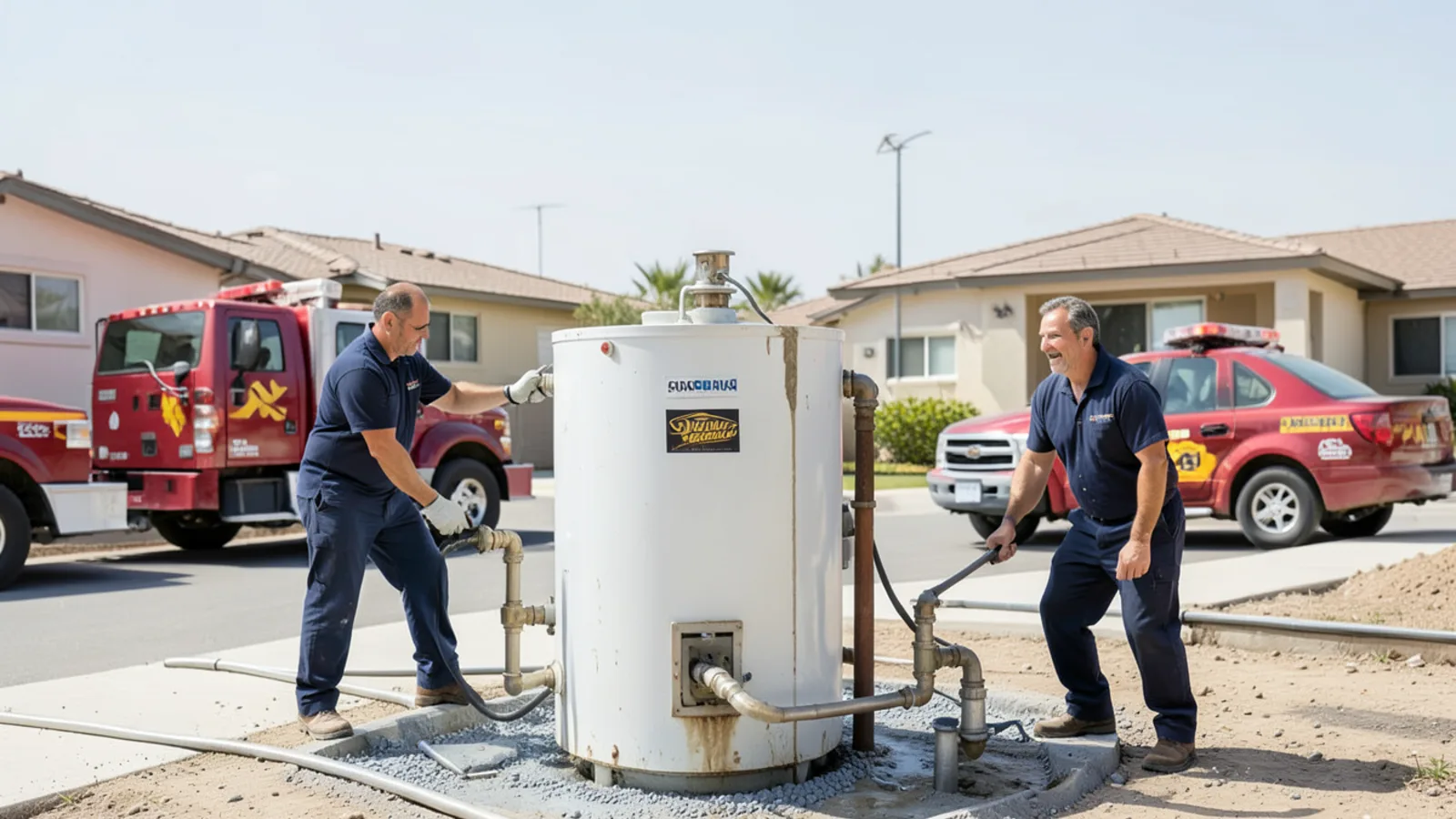
Tap water in Ontario and the surrounding Inland Empire averages between 138 and 210 ppm of calcium carbonate hardness (classified as hard to very hard). When heated, dissolved minerals precipitate out of solution and settle as a dense limestone crust at the bottom of water heater tanks. This sediment insulates water from the burner, leading to popping sounds, reduced efficiency, burned-out heating elements, and premature tank rupture within 6 to 10 years.
Guide Table of Contents
Water Hardness Levels Across the Inland Empire
Drinking water delivered to homes across Ontario, Chino, Upland, and Corona is drawn from deep regional groundwater aquifers and treated surface water imported via the State Water Project. These subterranean water sources travel through mineral-rich limestone and granite formations, absorbing substantial amounts of dissolved calcium and magnesium.
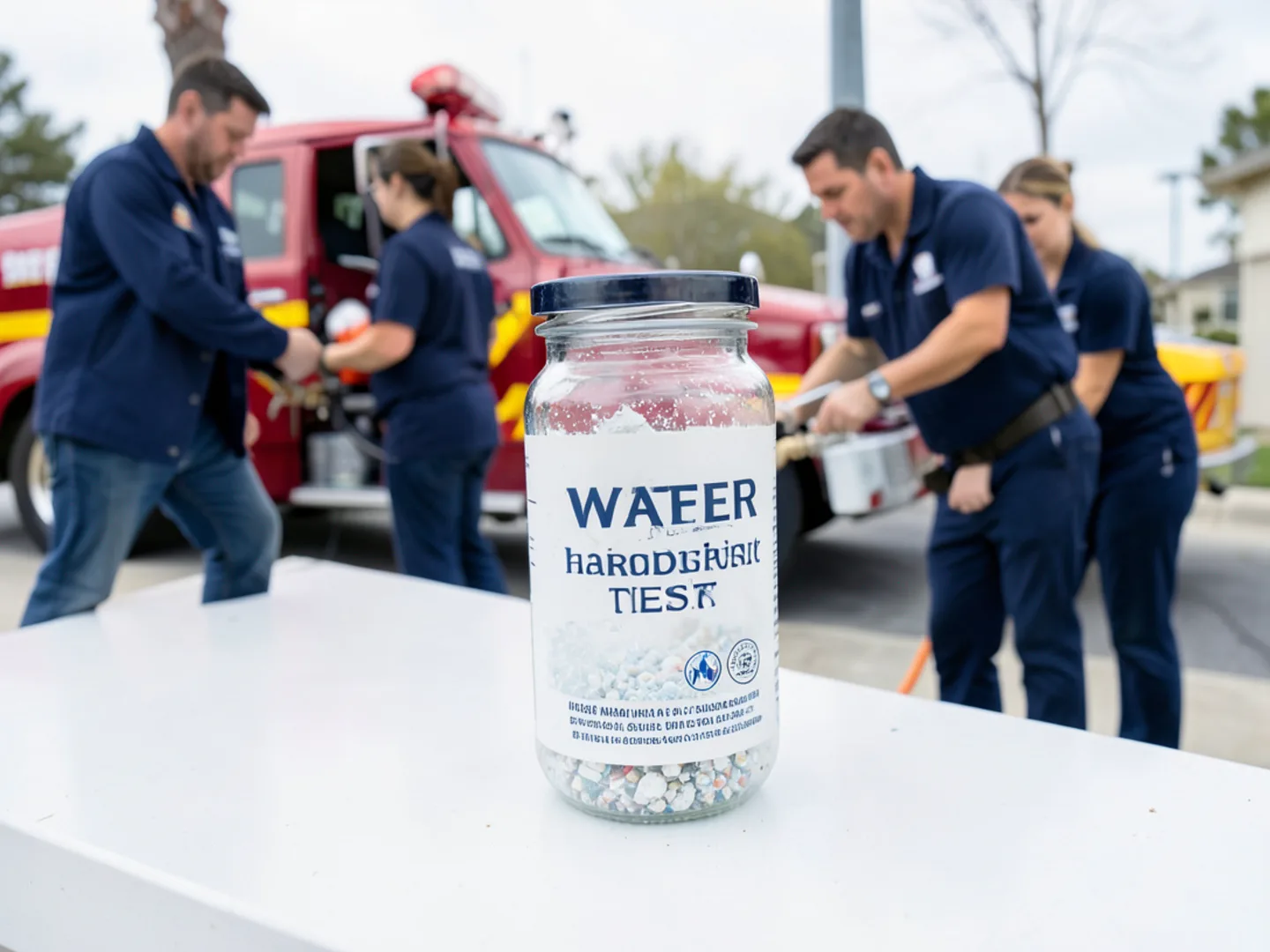
According to municipal Consumer Confidence Reports, water hardness across the West Valley measures between 8 and 14 grains per gallon (138 to 240 ppm CaCO₃). By comparison, water with more than 7 grains per gallon is classified as hard by the Water Quality Association.
| Municipal Water Agency | Service Area | Average Hardness (ppm) | Grains / Gallon |
|---|---|---|---|
| City of Ontario Municipal Utilities | Ontario | 138 – 185 ppm | 8.1 – 10.8 GPG |
| Cucamonga Valley Water District (CVWD) | Rancho Cucamonga | 140 – 210 ppm | 8.2 – 12.3 GPG |
| Monte Vista Water District (MVWD) | Montclair | 180 – 240 ppm | 10.5 – 14.0 GPG |
| City of Chino Water Division | Chino | 170 – 250 ppm | 9.9 – 14.6 GPG |
| Corona Dept of Water & Power | Corona | 150 – 240 ppm | 8.8 – 14.0 GPG |
Experiencing This Plumbing Issue Right Now?
Call our 24/7 Ontario dispatch line at (321) 559-0657 for prompt connection.
The Physics of Scale: How Minerals Destroy Storage Tanks
Calcium carbonate exhibits retrograde solubility: unlike sugar or salt, calcium dissolves less readily in hot water than in cold water. When incoming cold water enters a water heater and reaches temperatures above 120°F, dissolved calcium precipitates out of solution as microscopic rock crystals.
Over several months, these crystals accumulate at the bottom of the tank, forming a solid sediment layer that can reach 4 to 8 inches in depth. In gas water heaters, this sediment creates an insulating barrier between the gas flame beneath the tank and the water above.
The burner continues firing at full intensity, overheating the bottom steel tank plate to extreme temperatures. This thermal stress breaks down the protective glass lining, allowing water to contact bare steel and causing rapid corrosion and tank bottom failure.
Warning Signs That Your Water Heater Is Choked with Sediment
Recognizing sediment accumulation before tank failure allows homeowners to take corrective action. Look and listen for these symptoms:
- Popping or Rumbling Noises: Steam bubbles trapped beneath dense sediment erupt violently as they heat, creating a sound resembling popping popcorn inside the tank.
- Premature Hot Water Depletion: A tank filled with several inches of calcified rock holds significantly less water and takes much longer to recover temperature.
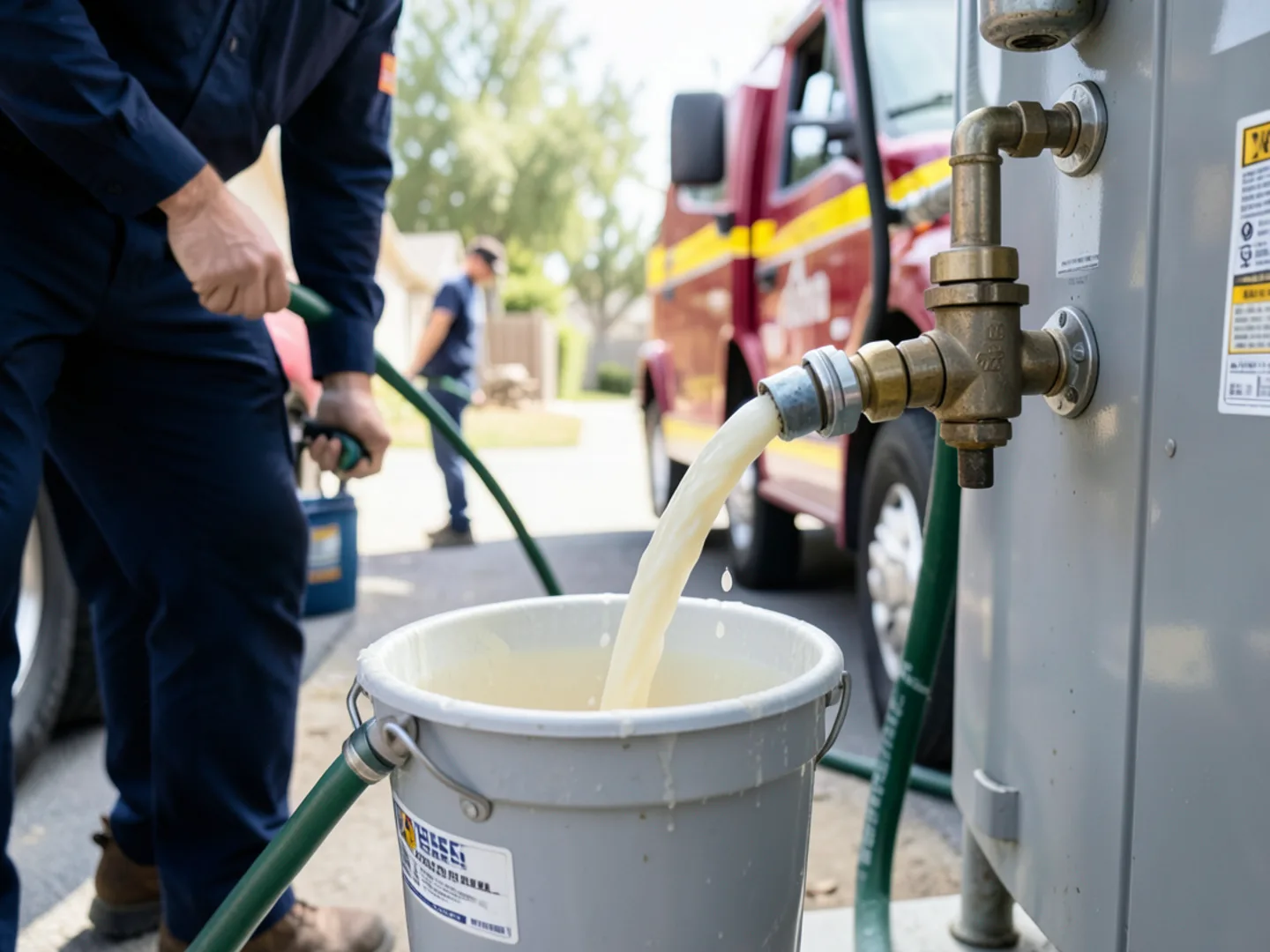
- Discolored or Cloudy Water: Fine mineral flakes and rust particles suspended in hot water produce cloudy or reddish-brown water from showerheads and faucets.
- Lower Heating Element Burnout: In electric water heaters, dense sediment buries the lower heating element, causing it to overheat and fail prematurely.
Annual Maintenance: Does Flushing Your Tank Actually Help?
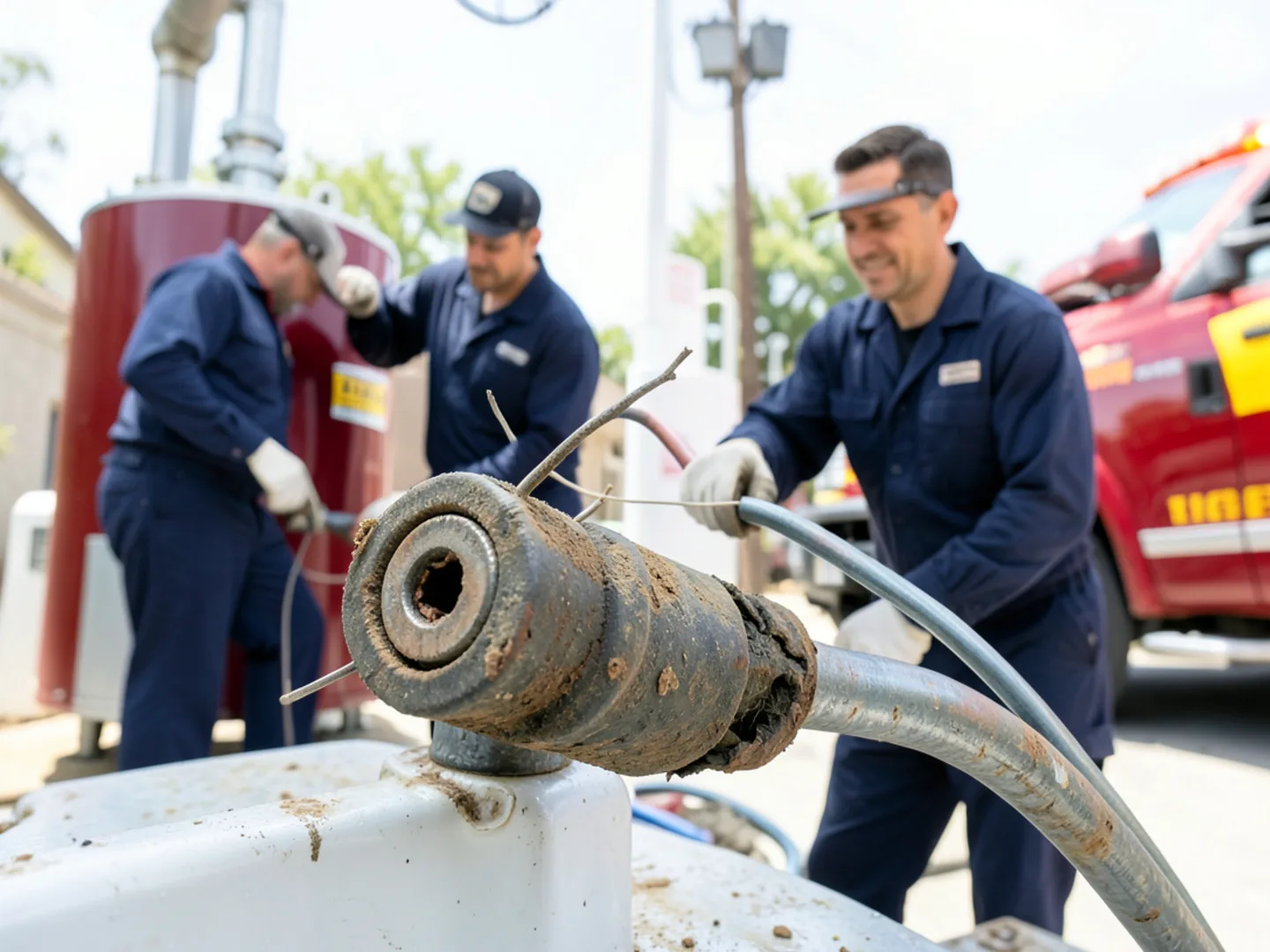
Annual sediment flushing is the most effective preventative measure for extending water heater lifespan in hard water regions. Attaching a garden hose to the bottom brass drain valve and opening the valve while the tank is under cold water pressure flushes loose mineral sediment out of the tank.
However, if a water heater has not been flushed for more than five or six years, heavy sediment may have already hardened into a solid limestone slab that cannot be drained through the small drain valve. In these instances, professional descaling or unit replacement is necessary.
Sacrificial Anode Rods: Your Tank Built-in Defense
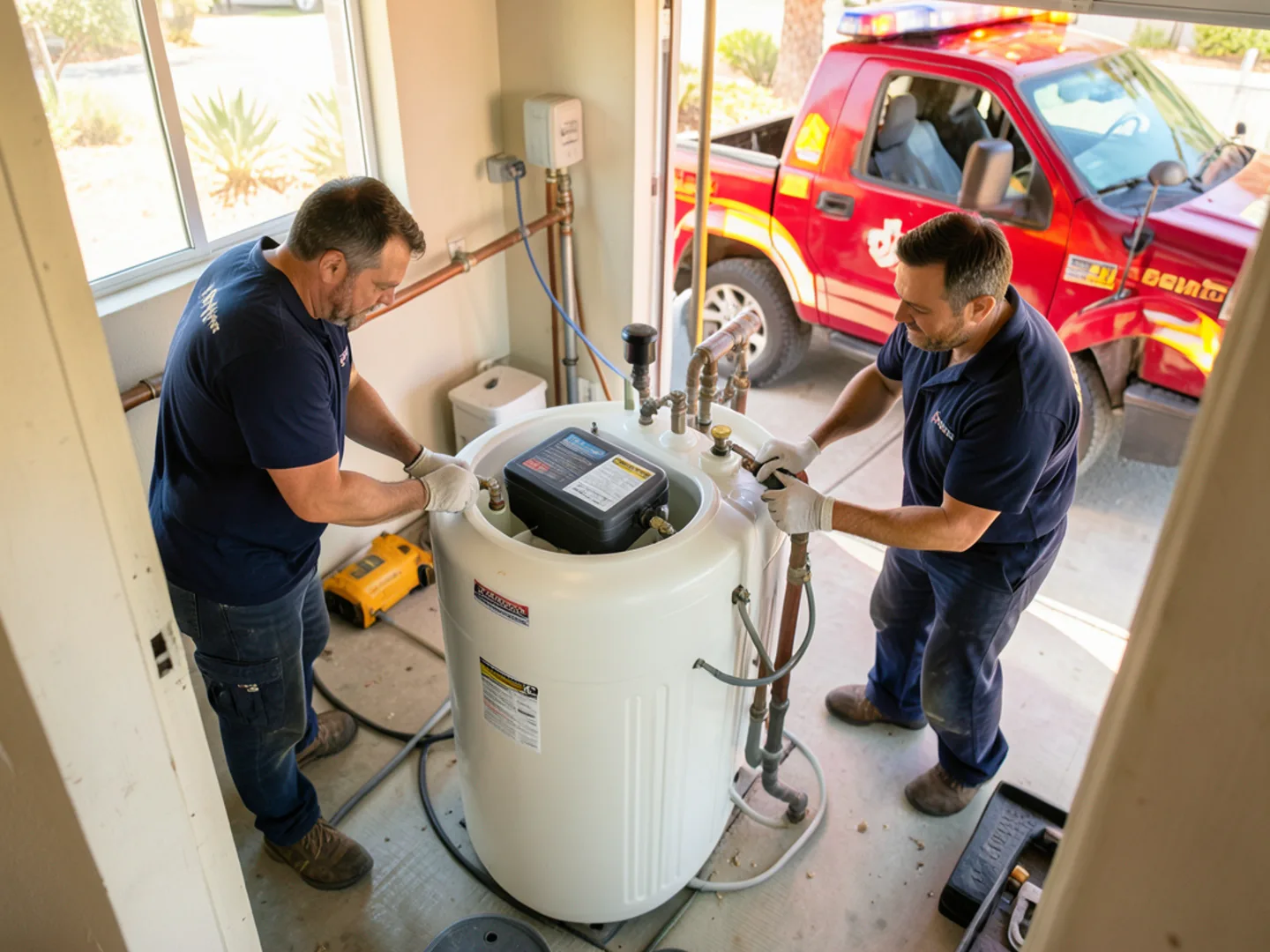
Inside every glass-lined steel water heater is a sacrificial anode rod made of magnesium or aluminum. Because these metals are electrochemically more reactive than steel, corrosive ions in hard water attack the anode rod instead of the tank walls.
In the Inland Empire, mineral-rich groundwater depletes sacrificial anode rods within 3 to 5 years. Once the anode rod is fully consumed, corrosive minerals attack the steel tank directly. Having a plumbing contractor inspect and replace the anode rod periodically can double the operational lifespan of your water heater.
Related Services & Communities We Serve
Sources, Research & Regulatory References
Our guides ground technical and pricing recommendations in verified state building codes, water utility quality reports, and federal safety standards.
- •
- •Water Hardness Classification and Treatment Standards — Water Quality Association (WQA)[View Source]
- •Water Heating Efficiency and Mineral Scaling Research — Oak Ridge National Laboratory (ORNL)[View Source]
Frequently Asked Questions
Due to the high mineral hardness of tap water (138–240 ppm CaCO₃), standard water heaters in Ontario and surrounding cities typically last between 7 and 10 years without maintenance, compared to 10 to 14 years in areas with soft water. Regular annual flushing and anode rod replacement can extend service life.
Questions About Your Home Plumbing in Ontario, CA?
Call our 24/7 dispatch line at (321) 559-0657. Get connected with independent local specialists for honest advice and written estimates.