
Does Homeowners Insurance Cover Slab Leaks in California?
In California, standard homeowners insurance policies (such as HO-3) typically cover "tear-out" costs to access a slab leak and resultant water damage to flooring, drywall, and personal property caused by a sudden and accidental pipe burst. However, the plumbing pipe repair itself (the piece of copper or PEX fitting) is generally considered routine maintenance and excluded, as is damage resulting from gradual long-term seepage.
Guide Table of Contents
The Critical Distinction: Tear-Out & Resulting Damage vs. Pipe Repair
Navigating a slab leak insurance claim in California requires understanding the fundamental distinction between three separate cost categories:
1. The Plumbing Repair: The actual labor and materials required to patch or reroute the leaking pipe (typically $250 to $600 for a spot patch). Insurers almost universally exclude this cost as normal wear-and-tear or home maintenance.
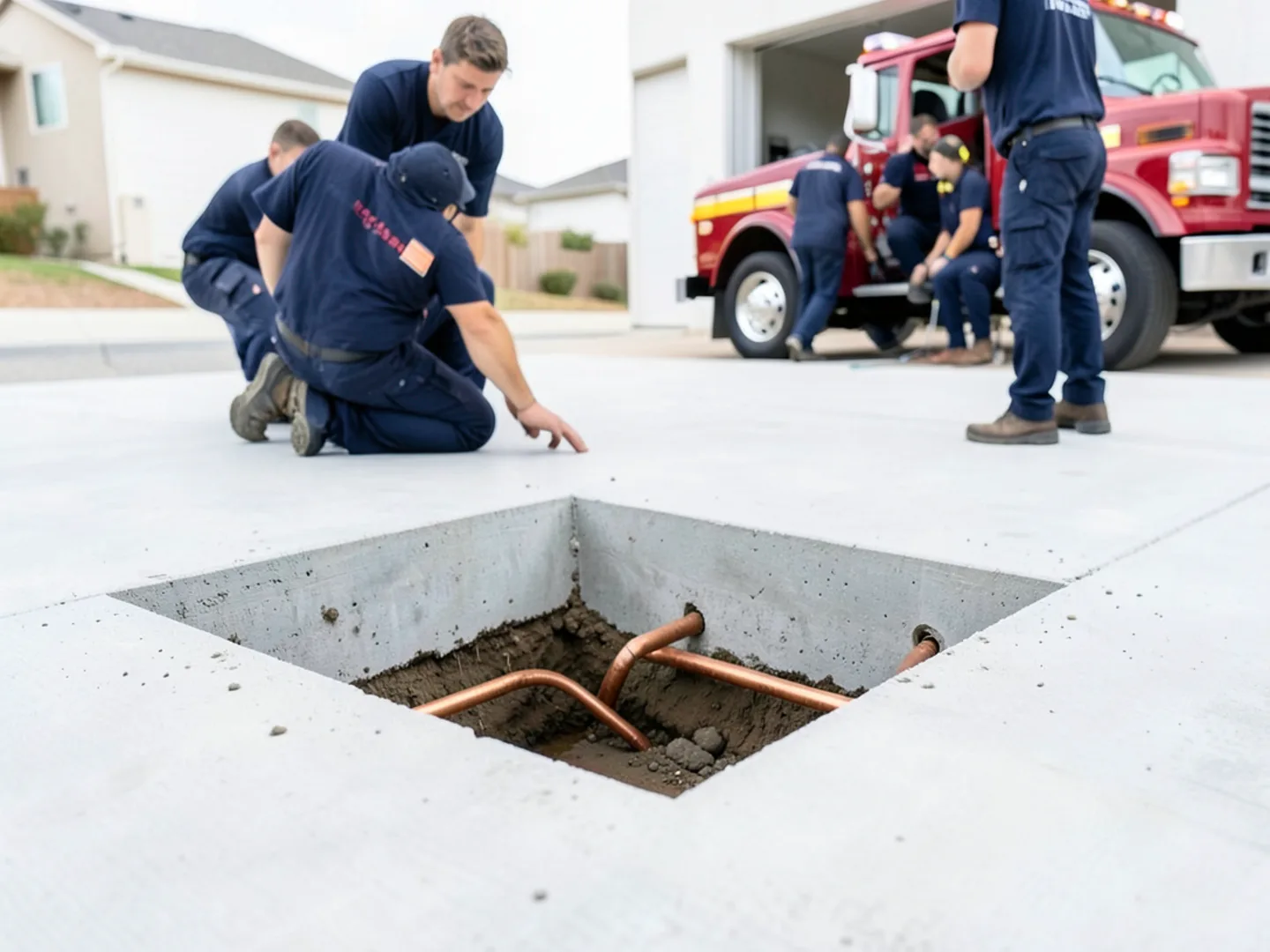
2. Tear-Out and Access Costs: The labor and expense required to demolish finished flooring and jackhammer through the concrete slab foundation to expose the pipe, as well as patching the concrete afterward. Most standard California policies cover tear-out costs.
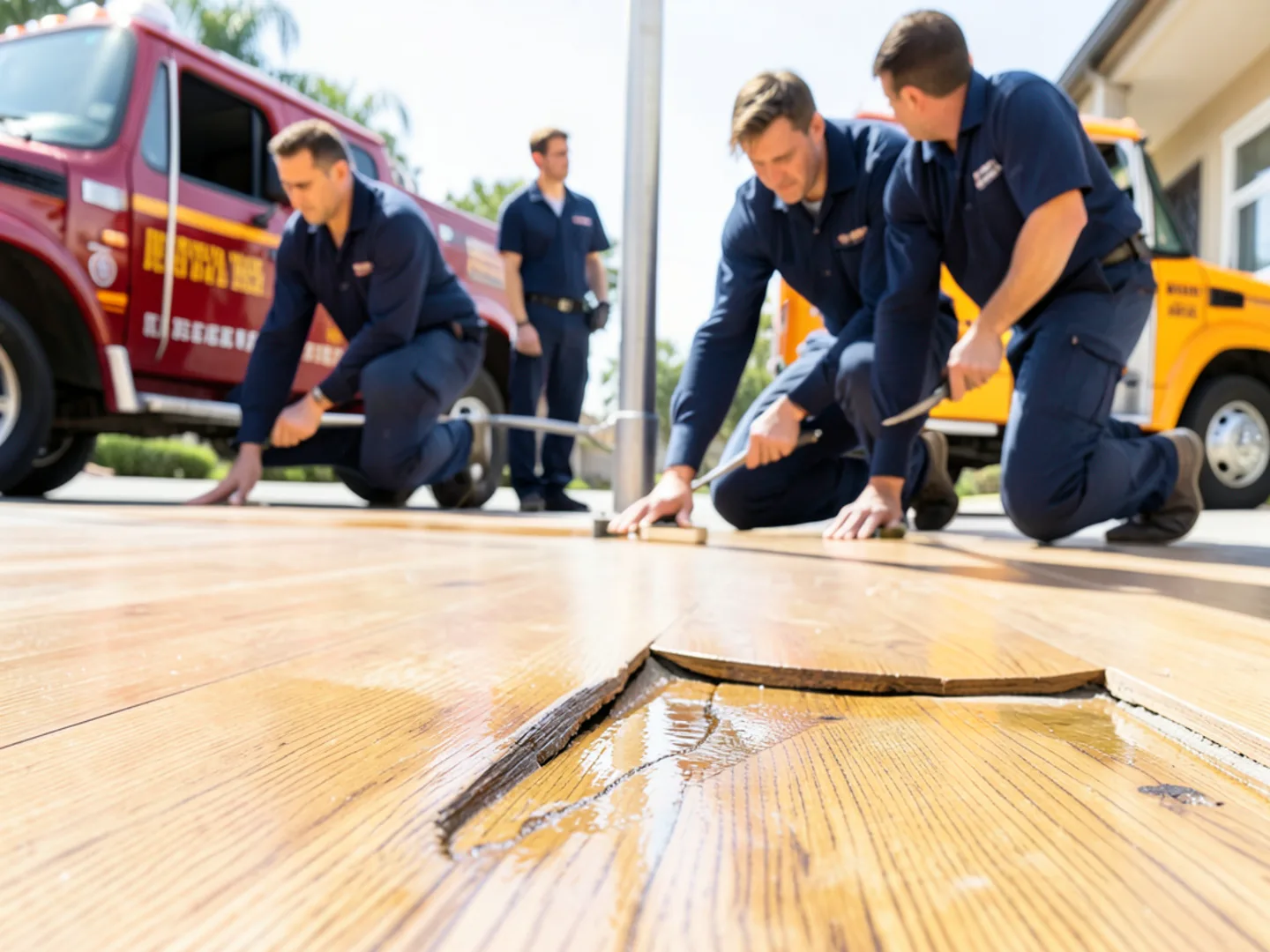
3. Resultant Water Damage: The cost of drying, remediating, and replacing water-damaged carpets, hardwood, drywall, insulation, and cabinetry. This constitutes the largest financial expense and is typically covered under standard dwelling and personal property provisions.
| Expense Category | Typical Cost | Standard Insurance Coverage |
|---|---|---|
| Pipe Splicing / Fitting Repair | $250 – $600 | Excluded (Maintenance / Wear & Tear) |
| Tear-Out / Foundation Concrete Access | $800 – $2,500 | Covered under Dwelling Access Provisions |
| Flooring & Drywall Remediation | $3,000 – $15,000+ | Covered under Sudden & Accidental Damage |
| Overhead PEX Attic Reroute | $1,800 – $4,200 | Often Partially Covered as Loss Mitigation |
Experiencing This Plumbing Issue Right Now?
Call our 24/7 Ontario dispatch line at (321) 559-0657 for prompt connection.
Sudden and Accidental vs. Gradual Leaks: What Adjusters Examine
Insurance adjusters evaluate physical evidence to determine whether a leak occurred suddenly or represents long-term unaddressed leakage. Under California insurance law, coverage applies to "sudden and accidental" discharges of water.
If an adjuster discovers extensive dry rot, multiple layers of black mold behind baseboards, or heavily rusted foundation anchor bolts, they may argue that the leak was a continuous seepage occurring over weeks or months, potentially issuing a partial or total claim denial.
This makes immediate action essential: having a qualified leak detection contractor document initial conditions with timestamped moisture readings, thermal imaging, and camera logs provides critical proof that the failure was addressed as soon as discovered.
Documentation That Strengthens Your Insurance Claim
To ensure a smooth claim settlement, collect thorough evidence before allowing any contractor or mitigation crew to begin demolition:
- Itemized Diagnostic Report: An official invoice from your leak detection contractor specifying the exact subterranean location and nature of the pipe fracture.
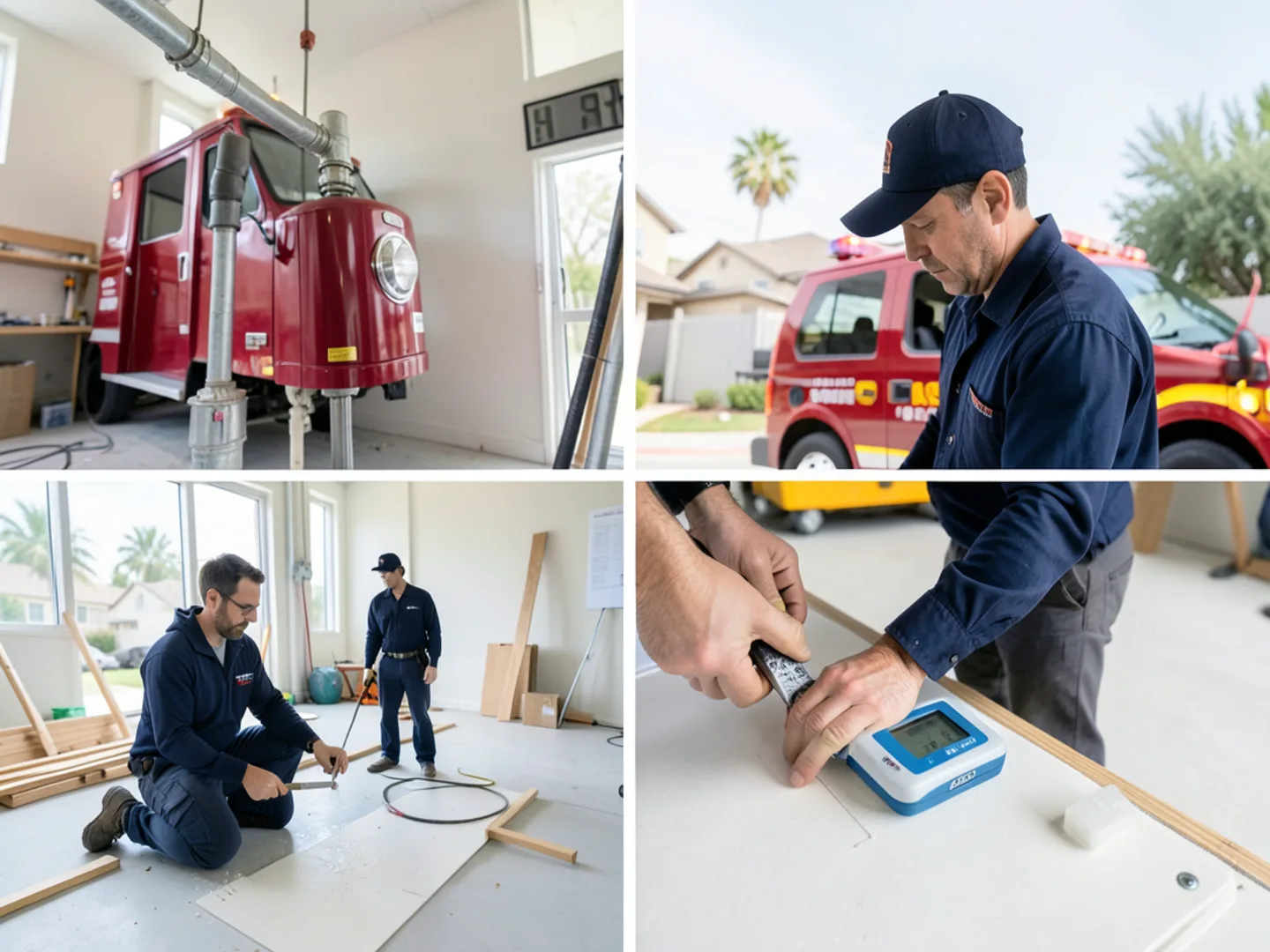
- Pre-Demolition Moisture Mapping: Digital moisture meter readings documenting water saturation percentages in drywall, baseboards, and subflooring.
- High-Resolution Photographs: Clear photos of the water meter running, warm spots highlighted on thermal cameras, and pooling water before extraction.
- Municipal Water Bills: Billing statements showing a sudden dramatic escalation in volume compared to normal seasonal averages.
Key Questions to Ask Your Insurance Adjuster
When communicating with your insurance carrier claim representative, ask these specific questions:
• Does my policy include full tear-out coverage to access subterranean plumbing lines?
• Will the policy pay for an overhead PEX reroute if it is less expensive than tearing up finished interior tile floors?
• What is my specific deductible for water damage claims?
• Does my coverage include ordinance or law coverage to pay for municipal building code upgrades required during reconstruction?
California Insurance Code Standards and Consumer Protections
Homeowners dealing with delayed or disputed water claims benefit from understanding California statutory protections. Under California Insurance Code Section 790.03 and Title 10 of the California Code of Regulations (Fair Claims Settlement Practices), property insurers must adhere to strict operational timelines.
Insurers must acknowledge receipt of notice of claim within 15 calendar days, immediately provide necessary claim forms and instructions, and conduct a thorough, unbiased investigation. Once all proof of loss documentation is submitted, the insurer has 40 calendar days to accept or deny the claim in writing, citing specific policy provisions for any excluded damages.
Furthermore, under California Insurance Code Section 2071, residential property policyholders possess the statutory right to invoke an independent appraisal process if there is a dispute regarding the carrier valuation of structural repairs or tear-out allowances. In an appraisal, both parties select an independent appraiser, and a neutral umpire resolves valuation disagreements, ensuring fair reimbursement without courtroom litigation.
Related Services & Communities We Serve
Sources, Research & Regulatory References
Our guides ground technical and pricing recommendations in verified state building codes, water utility quality reports, and federal safety standards.
- •Residential Property Insurance Guide and Water Damage Claims — California Department of Insurance (CDI)[View Source]
- •Understanding Homeowners Coverage for Water Damage and Slab Leaks — Insurance Information Institute (III)[View Source]
Frequently Asked Questions
Often yes. Many insurance adjusters in California will agree to apply the tear-out and floor restoration allowance toward an overhead PEX reroute, because rerouting lines through the attic is frequently less expensive than jackhammering through expensive hardwood or tile flooring and replacing the subfloor.
Questions About Your Home Plumbing in Ontario, CA?
Call our 24/7 dispatch line at (321) 559-0657. Get connected with independent local specialists for honest advice and written estimates.