
Tree Roots and Old Clay Sewer Lines in Pomona, Upland and Claremont
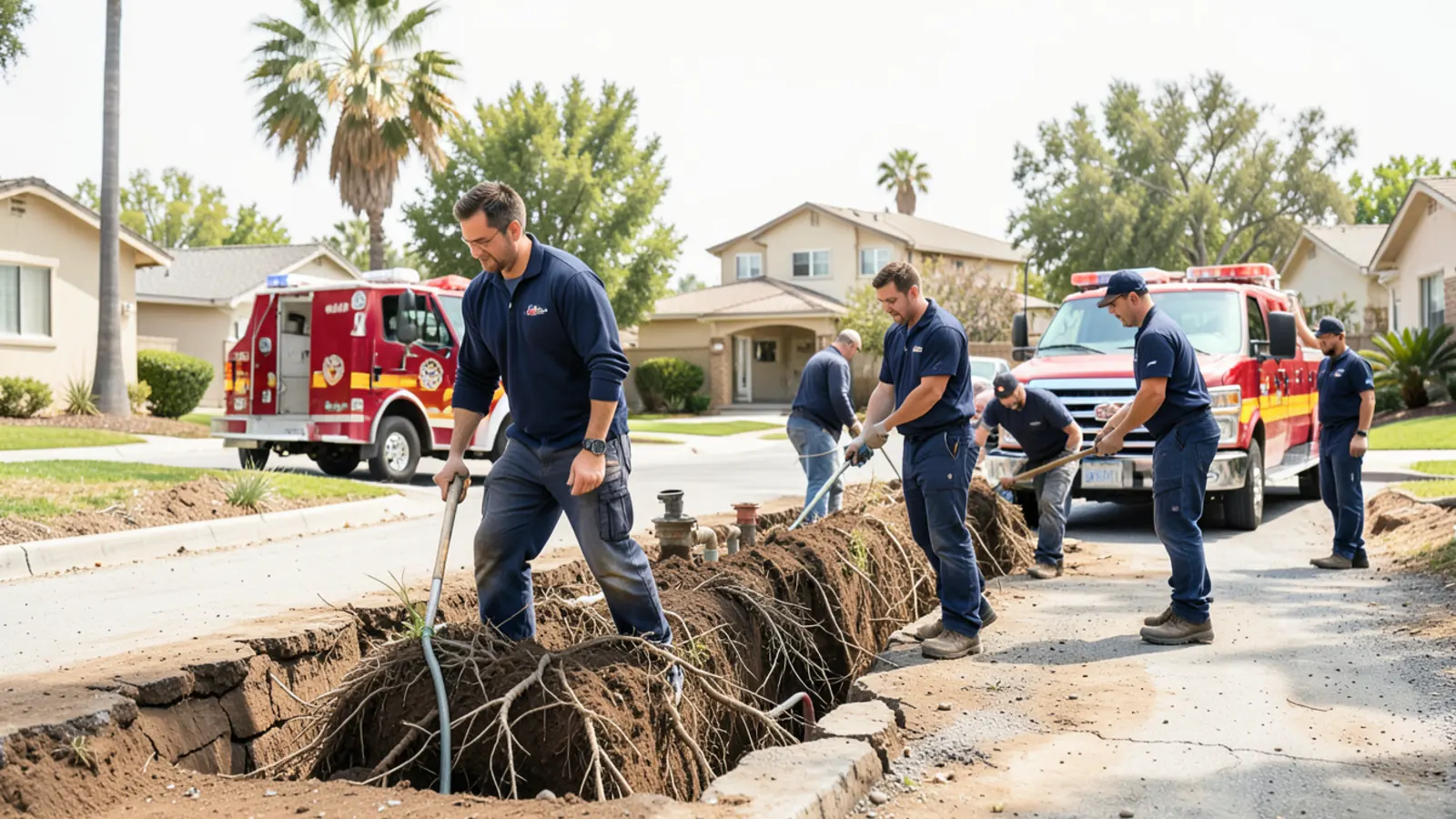
Homes built before 1970 throughout Pomona, Upland, and Claremont were plumbed with vitrified clay sewer laterals. Over decades, moisture-seeking roots from mature street trees—such as eucalyptus, camphor, ficus, and pepper trees—penetrate micro-fractures in clay mortar joints. As roots expand inside the pipe, they trap toilet paper and solids, causing recurrent sewage backups. Hydro-jetting provides temporary relief, while trenchless cured-in-place pipe (CIPP) relining offers a permanent root-proof solution without destroying landscaping.
Guide Table of Contents
Why Older West Valley Homes Have Vitrified Clay Laterals
The historic citrus communities of the West Valley—particularly Pomona, Upland, and Claremont—underwent massive residential expansion between 1910 and 1965. During this era, vitrified clay pipe (VCP) was the standard material for private residential sewer laterals running from homes out to municipal sewer mains.
Vitrified clay is chemically inert and virtually immune to internal sewer gas corrosion. However, clay pipe was installed in short 3-to-5-foot sections connected by cement mortar or tar pitch collars. Over 50 to 80 years of ground settlement and seismic vibrations, these rigid joints crack and shift, creating inviting entry pathways for moisture-seeking tree roots.
Experiencing This Plumbing Issue Right Now?
Call our 24/7 Ontario dispatch line at (321) 559-0657 for prompt connection.
How Tree Roots Infiltrate and Destroy Clay Sewer Joints
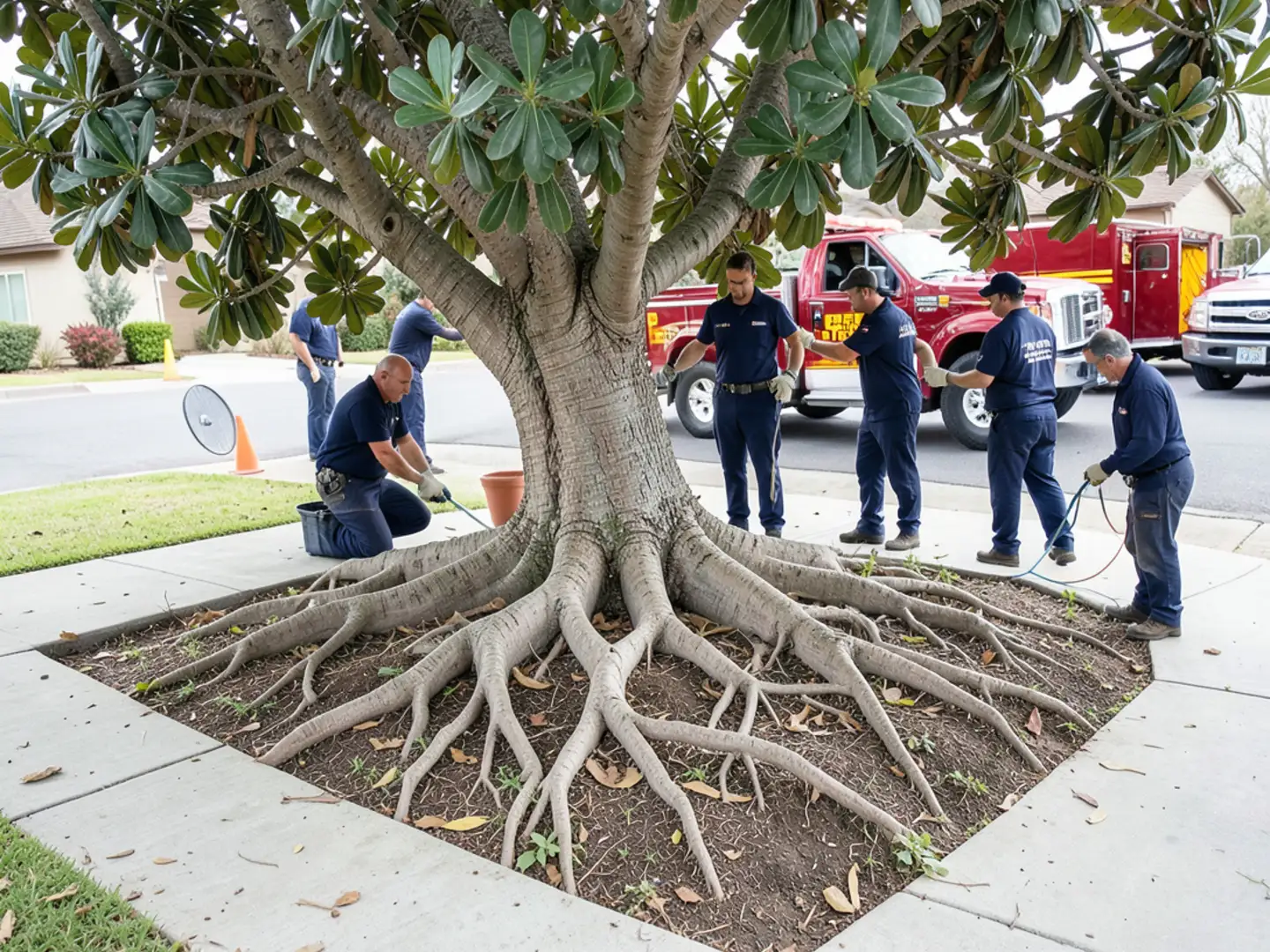
Southern California arid Mediterranean climate means surface soils become dry during summer and fall. Trees survive by extending extensive subterranean root systems hundreds of feet in search of moisture and nutrients.
Warm water vapor escaping from cracked sewer joints creates a moisture gradient in the soil. Microscopic root hair tips—some as thin as a single human hair—enter the joint. Once inside the nutrient-rich sewer stream, the root accelerates growth, expanding into dense, fibrous root curtains that trap waste solids and completely block water flow.
| Tree Species | Common West Valley Locations | Root Aggressiveness | Typical Risk Level |
|---|---|---|---|
| Ficus (Indian Laurel Fig) | Pomona & Claremont Street Parkways | Extremely Aggressive surface & deep roots | Severe Joint Cracking & Pipe Crush |
| Blue Gum Eucalyptus | Upland (Euclid Avenue Corridor) | Deep, powerful woody root systems | Mortar Penetration & Lateral Shift |
| California Pepper Tree | Rancho Cucamonga & Upland Historic Groves | Sprawling shallow-to-medium roots | Dense Fibrous Root Balls Inside Pipe |
| Camphor Tree | Claremont Historic Village Precinct | Broad dense root network | Persistent Joint Infiltration |
Warning Signs of Sewer Line Root Intrusion
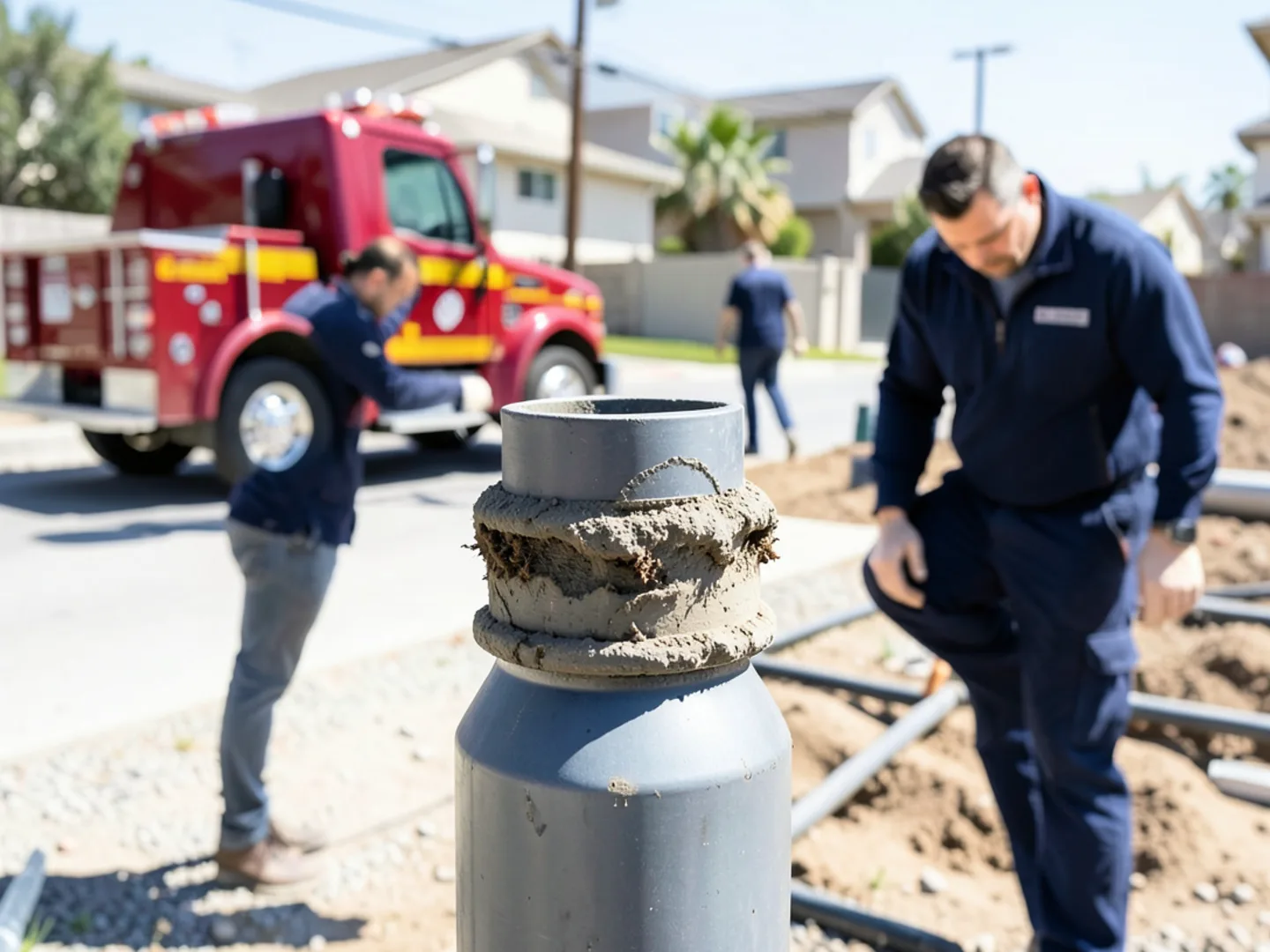
Sewer line blockages develop progressively. Homeowners should recognize the early warning symptoms before sewage overflows into living spaces:
- Gurgling Toilet Bowls: Hearing air bubbling or gurgling in toilet bowls when a washing machine drains or bathroom sink empties.
- Slow Drains Across Multiple Fixtures: Water draining sluggishly in ground-floor bathtubs and showers simultaneously.
- Recurring Cleanout Overflows: Sewage or paper waste spilling out of the outdoor yard cleanout relief cap.
- Sewer Odors Along the Front Yard: Smelling sulfur or sewer gas near front walkways where underground laterals have fractured.
Clearing vs. Permanent Repair: Mechanical Snaking, Hydro-Jetting, and CIPP
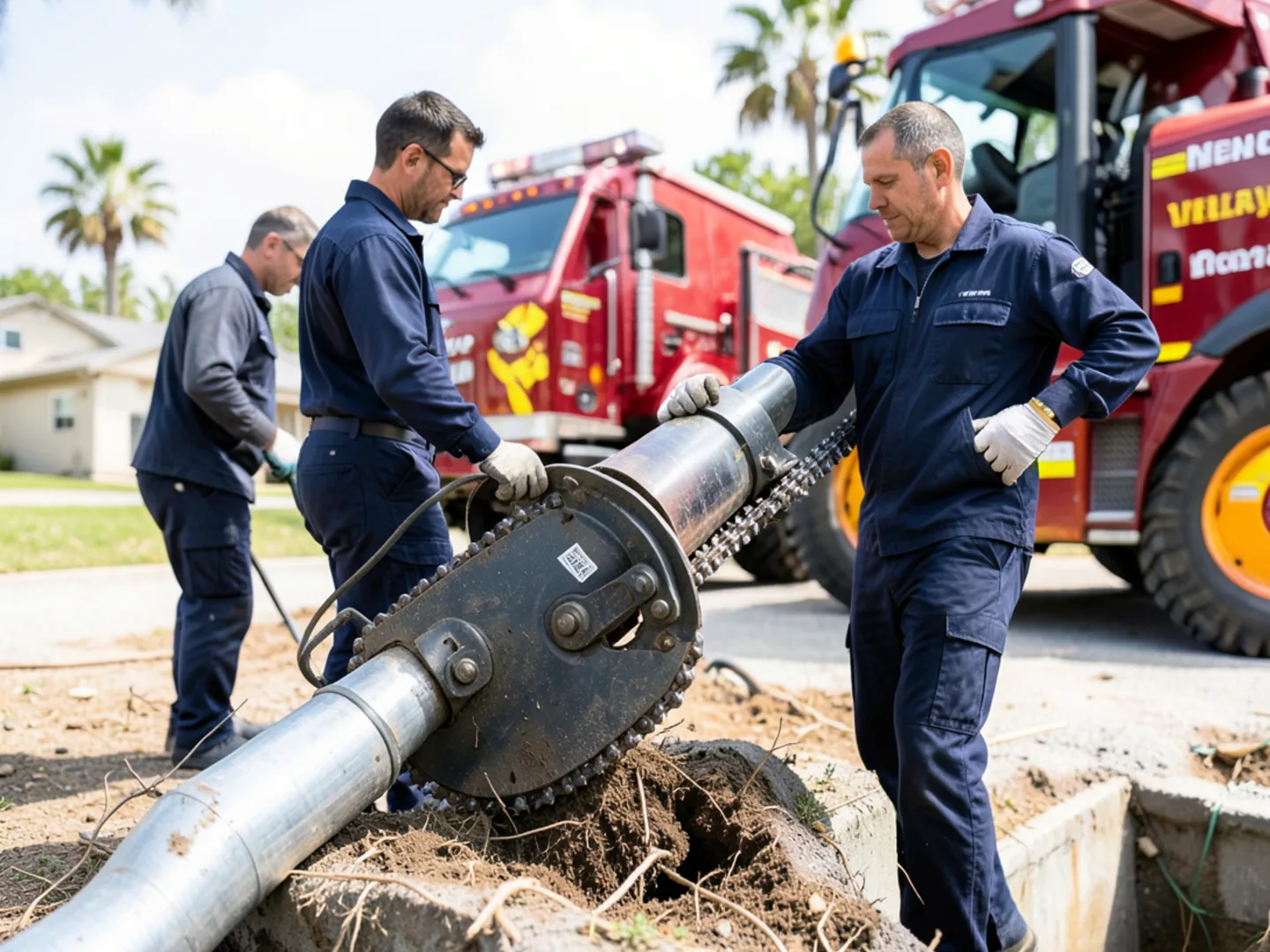
Property owners have several technical options for addressing root intrusion in clay sewer lines:
1. Mechanical Cable Snaking: A rotating steel blade cuts a narrow hole through the center of the root mass. While this restores emergency drainage, the root remains anchored in the joint and typically regrows within 3 to 6 months.
2. High-Pressure Hydro-Jetting: Blasting the pipe interior with water at 3,500 to 4,000 PSI using specialized rotating cutting nozzles shears roots flush against the clay wall and scours away grease sludge. This provides 12 to 18 months of clear flow.
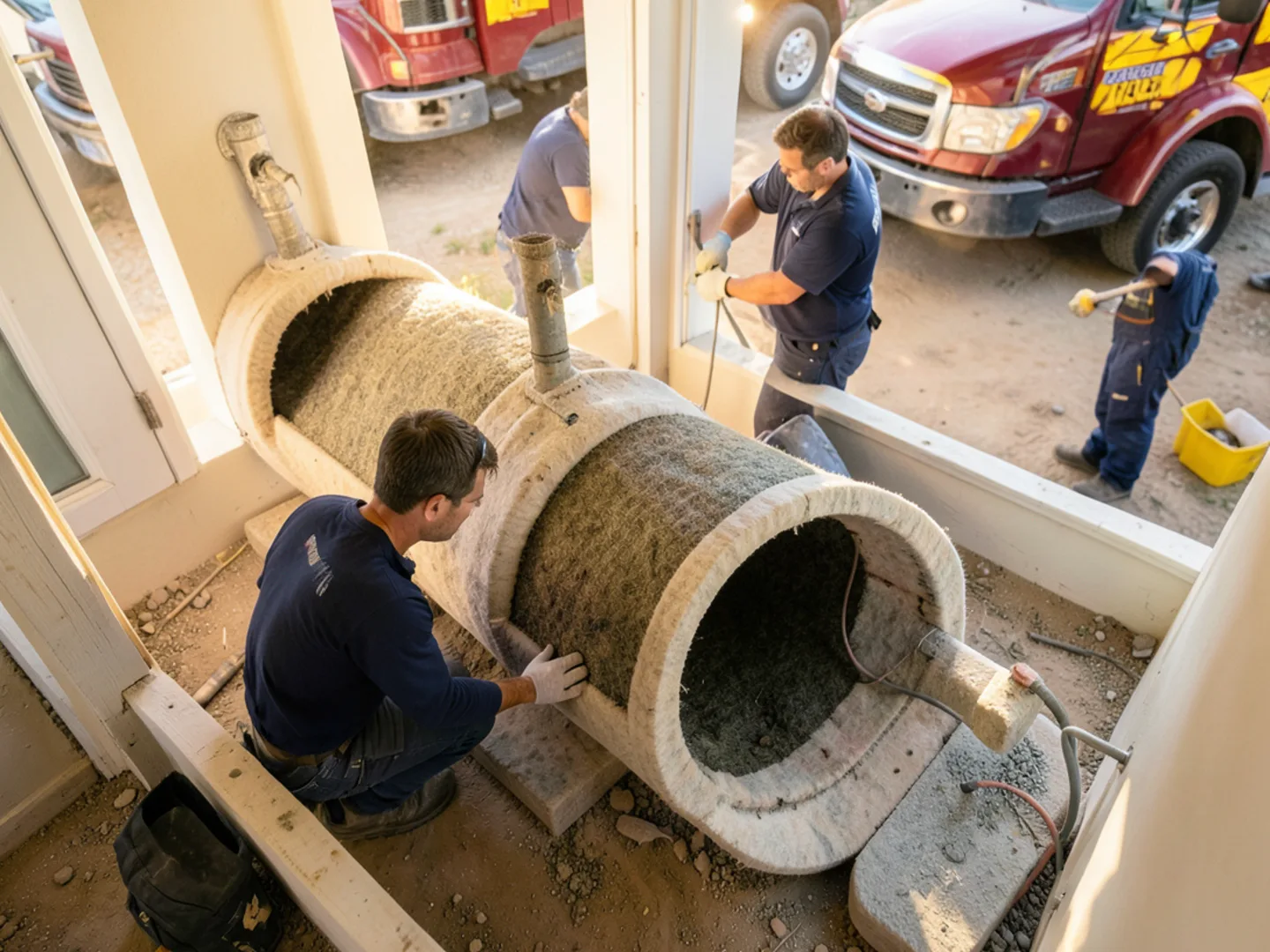
3. Trenchless CIPP Epoxy Lining: The permanent modern solution. A flexible felt liner saturated with epoxy resin is inserted into the clay pipe from an existing cleanout, inflated, and cured into a seamless, structural pipe-within-a-pipe. Because CIPP has zero joints, tree roots can never re-enter.
Property Owner Responsibilities and Municipal Codes
In Pomona, Upland, and Claremont, municipal codes stipulate that the residential property owner is financially responsible for the maintenance and structural integrity of the entire private sewer lateral—from the house foundation all the way to the saddle connection at the city main in the public street.
If root damage causes the lateral to collapse under the sidewalk or public roadway, municipal repairs can cost upwards of $10,000 to $15,000 in street excavation fees. Resolving root intrusion early with trenchless relining avoids costly public right-of-way street repairs.
Related Services & Communities We Serve
Sources, Research & Regulatory References
Our guides ground technical and pricing recommendations in verified state building codes, water utility quality reports, and federal safety standards.
- •Sewer Lateral Maintenance and Ownership Regulations — City of Pomona Public Works Department[View Source]
- •Sewer System Master Plan and Lateral Rehabilitation Guidelines — City of Upland Public Works[View Source]
- •Tree Root Damage to Underground Utilities: Technical Guidance — International Society of Arboriculture (ISA)[View Source]
Frequently Asked Questions
In Pomona, Upland, and most Southern California municipalities, the property owner owns and is responsible for the entire private sewer lateral from the house to the connection point (saddle) at the city sewer main, even the section running under the public street and sidewalk.
Questions About Your Home Plumbing in Ontario, CA?
Call our 24/7 dispatch line at (321) 559-0657. Get connected with independent local specialists for honest advice and written estimates.